

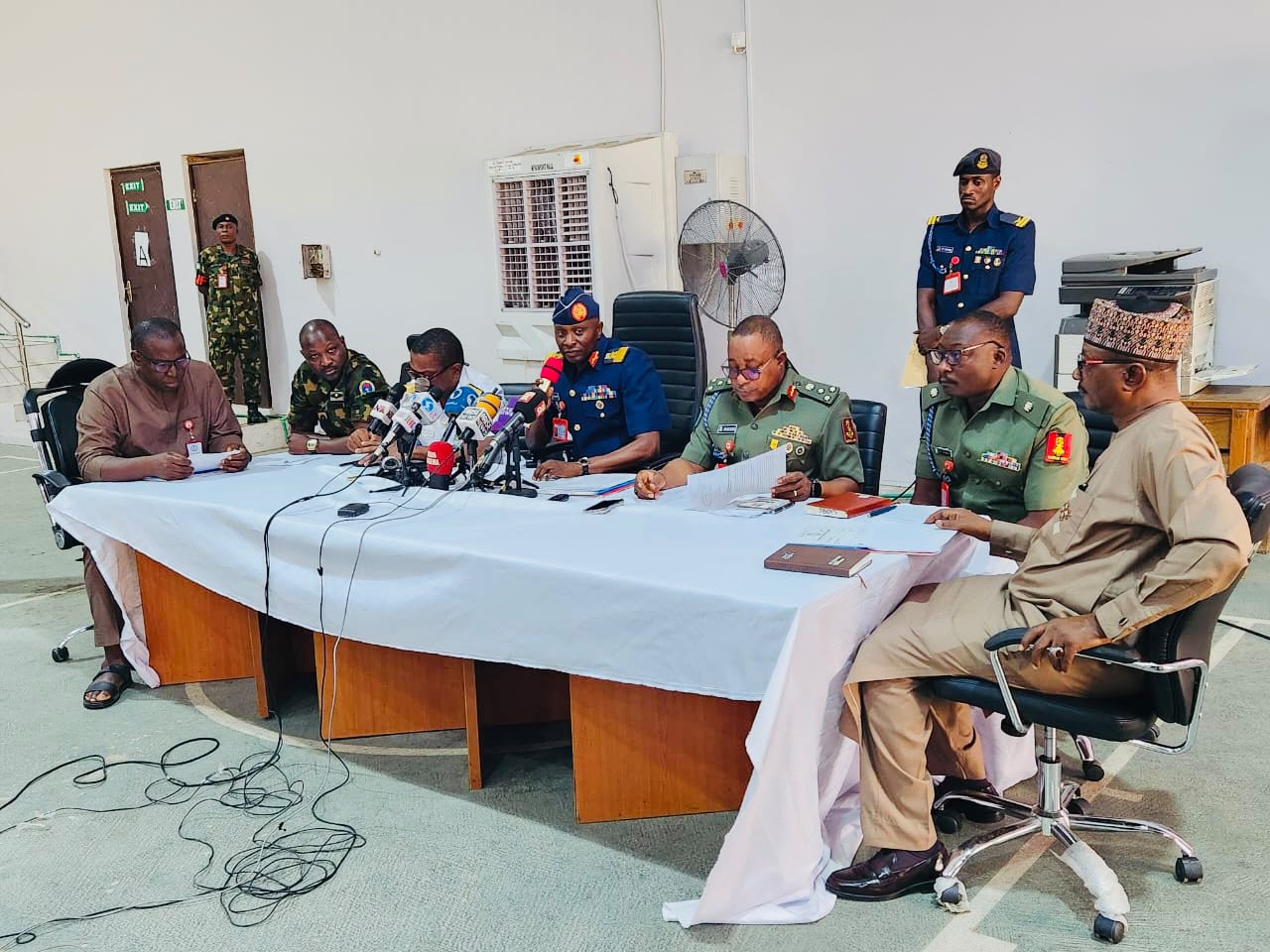
The Military Pensions Board has defended its computation of pension arrears paid to retired military personnel, insisting that the payments were calculated in accordance with the Pension Reform Act and approved salary adjustment guidelines.
The Chairman of the board, Air Vice Marshal Mikail Abdulraheem, gave the explanation during a press briefing with military veterans and journalists following complaints over alleged discrepancies in the consequential adjustments paid to retirees.
The controversy followed the Federal Government’s approval of salary increases of 80 per cent, 50 per cent and 30 per cent for different categories of serving military personnel.
Abdulraheem said the board relied on the salary structure approved by the National Salaries, Incomes and Wages Commission and the applicable pension computation formula.
“We have adhered strictly to that chart,” he said, adding that the board was legally required to follow the approved guidelines in determining pension entitlements.
He explained that pension payments were based on years of service and final pensionable emoluments, with eligible retirees entitled to between 40 per cent and 90 per cent of their final emoluments.
According to him, personnel who served for 10 years are entitled to 40 per cent of their final emoluments, with the percentage increasing by two points for each additional year of service until it reaches 90 per cent for those who completed 35 years.
Using a Master Warrant Officer as an example, the chairman said a monthly emolument of about ₦434,211 would translate to a monthly pension of approximately ₦390,790 for an officer who served for 35 years.
He said the difference between the new pension rate and the previous rate amounted to about ₦127,063, which was paid as consequential adjustment arrears.
Abdulraheem maintained that the board could not depart from the approved formula based on individual expectations, noting that any fundamental change would require an amendment to the relevant law.
“We are not applying common sense. We are applying explanation from what the book says,” he said.
The chairman also dismissed suggestions that the board intended to short-change military retirees, saying he had personal ties to the military community and would eventually become a veteran himself.
“If I cheat veterans, I’m also going to cheat myself, because I’ll be part of that community tomorrow,” he said.
Earlier, Abdulraheem acknowledged receiving a letter dated October 8, 2026, from the Coalition for Military Veterans Welfare, which raised concerns over alleged disparities in the consequential adjustment arrears recently paid to retirees.
The letter, signed by retired Lieutenant Colonel I.A. Nass, alleged that some retirees in the 80 per cent adjustment category received increases ranging from 30 per cent to 75 per cent, while those in the 50 per cent category received between 30 per cent and 48 per cent.
The coalition also questioned the difference in arrears paid to Warrant Officers and Master Warrant Officers, alleging that some Warrant Officers received about ₦147,000, compared with approximately ₦127,000 paid to Master Warrant Officers.
It said the variations had generated dissatisfaction among retirees and called on the board to provide a detailed breakdown of its calculations.
The group also sought clarification on pension arrangements for medically boarded veterans, particularly those who had previously complained about reductions in their allowances.
Responding, Abdulraheem invited the veterans to present their calculations and the relevant authorities supporting their claims, promising that the board would explain its methodology.
He said representatives of the National Salaries, Incomes and Wages Commission had also been invited to clarify the applicable salary structure and calculations.
However, the chairman urged retirees to channel their complaints through recognised organisations, warning that the board would no longer entertain separate delegations from multiple groups presenting identical issues without appropriate recognition.
During the briefing, a retired Master Warrant Officer, Augustine Duru, challenged the computation, arguing that the arrears paid to him did not reflect his expected entitlement following the adjustment.
Duru, who said he retired five years ago, presented his calculations to support his claim that he had been underpaid.
In response, the Director of Navy Pensions, Commodore O.A. Eyitawo, explained that the figure used by the retiree represented the annual total emolument under the applicable salary structure, not the monthly pension.
He said the pension was calculated as a percentage of the retiree’s final emoluments, depending on the number of years served, and demonstrated how the consequential adjustment was derived from the difference between the old and new pension rates.
The board maintained that its calculations complied with the approved salary structure and pension provisions, while veterans continued to demand clarification over the alleged disparities in the payments.
Matthew Abi