
The Federal Government has quarantined high-risk contacts of Nigeria’s confirmed imported Ebola case and isolated other contacts as part of efforts to prevent the spread of the disease.
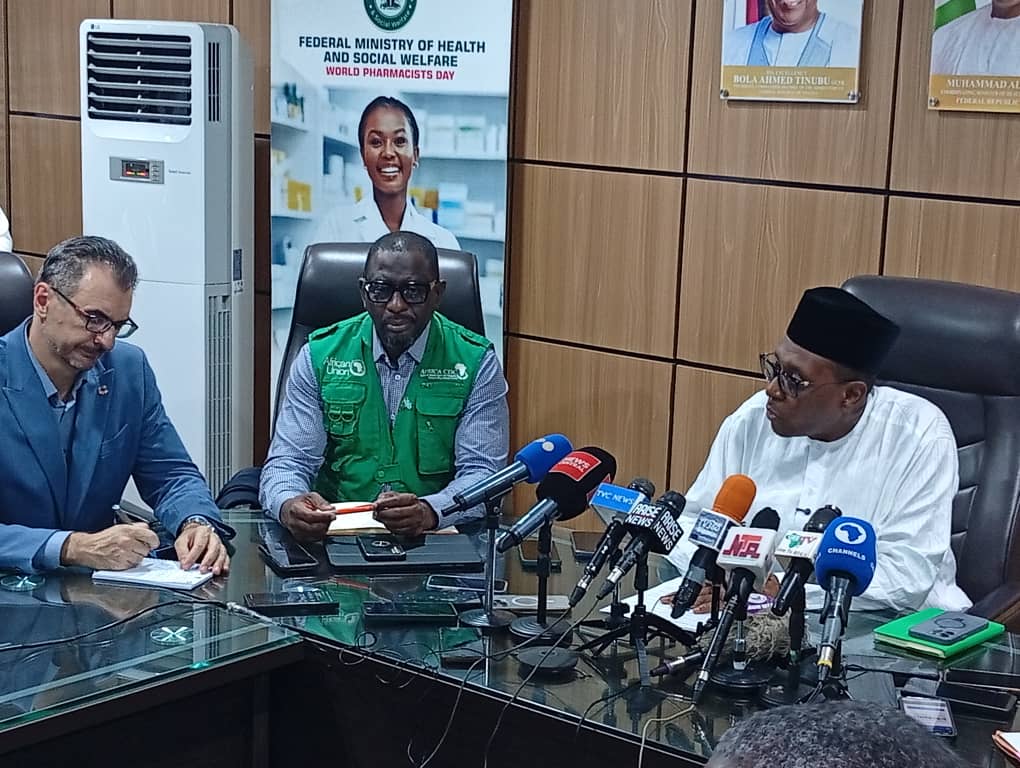
The Minister of Health and Social Welfare, Professor Muhammad Ali Pate, disclosed this on Thursday while briefing journalists on the government’s response to the outbreak, saying the patient was responding to treatment.
Pate said the patient’s laboratory results had shown significant improvement, raising hopes of recovery, but added that medical personnel were continuing to monitor her condition.
“Today, I spoke to the clinicians, and I understand that her lab results are showing great improvement, and there’s a possibility that she would recover from this,” the minister said.
He explained that the case was classified as imported because of the patient’s travel history, adding that she had no symptoms when she arrived in Nigeria but developed them a few days later.
According to him, contact tracing began immediately after the case was confirmed, with health authorities identifying contacts at the hospital, a private clinic and among the patient’s domestic contacts.
“The high-risk contacts have been quarantined fully in a facility. The others have been isolated, and we’re ensuring that the isolation is enforced consistent with public health expert guidelines,” he said.
Pate, however, assured Nigerians that there was no evidence of community transmission, urging the public to remain vigilant and cooperate with health authorities.
“There is no need for panic. It is a contained single case, and we are diligently working to ensure that it remains so,” he said.
The minister said the Nigeria Centre for Disease Control and Prevention had activated its incident management system in collaboration with the Federal Capital Territory Administration and other relevant agencies.
He added that President Bola Tinubu had released additional resources to support the response, while the Federal Government had briefed the Presidential Task Force, the Nigeria Governors’ Forum and the National Economic Council on the situation.
Pate said the government was also collaborating with the World Health Organisation, the Africa Centres for Disease Control and Prevention and other technical partners to contain the infection.
According to him, Nigeria’s public health authorities diagnosed the case within 24 hours of being notified and informed the WHO.
The government is also working with Professor Christian Happi, a genomics expert at Redeemer’s University, to complement the NCDC’s efforts in analysing the virus.
Pate explained that Ebola was not an airborne disease but was transmitted through contact with infected body fluids.
He urged Nigerians to wash their hands regularly, avoid contact with other people’s body fluids and promptly report symptoms such as fever, headaches and muscle aches, particularly if they had a relevant travel history.
He also called on people identified as contacts to comply with quarantine and isolation instructions, warning that failure to follow public health advice could expose others to infection.
The minister said hospitals, including private health facilities, had been directed to strengthen infection prevention measures, prepare isolation beds and ensure adequate protection for health workers.
He added that state governments had been urged to assess their preparedness and ensure that health facilities could respond effectively if the situation changed.
Pate further disclosed that the government was strengthening surveillance at Nigeria’s points of entry, including ensuring that thermal imaging equipment remained functional and that travellers were assessed in line with international health regulations.
The minister said the government had not recommended cancelling or altering planned public gatherings, including political campaigns and conferences, because the case remained contained.
“At this moment, there is no indication that requires us to alter the course of large gatherings that have been planned. But if the situation changes, we’ll make a determination,” he said.
He stressed that any decision to impose restrictions would be based on scientific evidence and expert advice rather than political considerations.
Pate also warned political leaders against politicising the outbreak, describing health as a unifying issue that transcended political, religious and ethnic differences.
“We certainly will encourage them to not politicise a humanitarian and public health issue. If there is one issue that will unite Nigerians, it is health, because health has no political party, has no citizenship, has no nationality, has no tribe, no religion. It is a great unifier,” he said.
He urged journalists and social media users to rely on verified information from health authorities and avoid spreading rumours that could undermine public confidence in the response.
The minister said the Ministry of Health and Social Welfare and the NCDC would continue to provide updates as contact tracing and other investigations progressed.
He expressed confidence in Nigeria’s capacity to contain the infection, citing the country’s previous experience in managing Ebola outbreaks and the coordinated efforts of health authorities and their partners.
Matthew Abi