
The Federal Government has urged state and local governments to take responsibility for the maintenance, staffing and daily operations of 4,434 revitalised primary healthcare centres across the country to sustain investments in grassroots healthcare delivery.
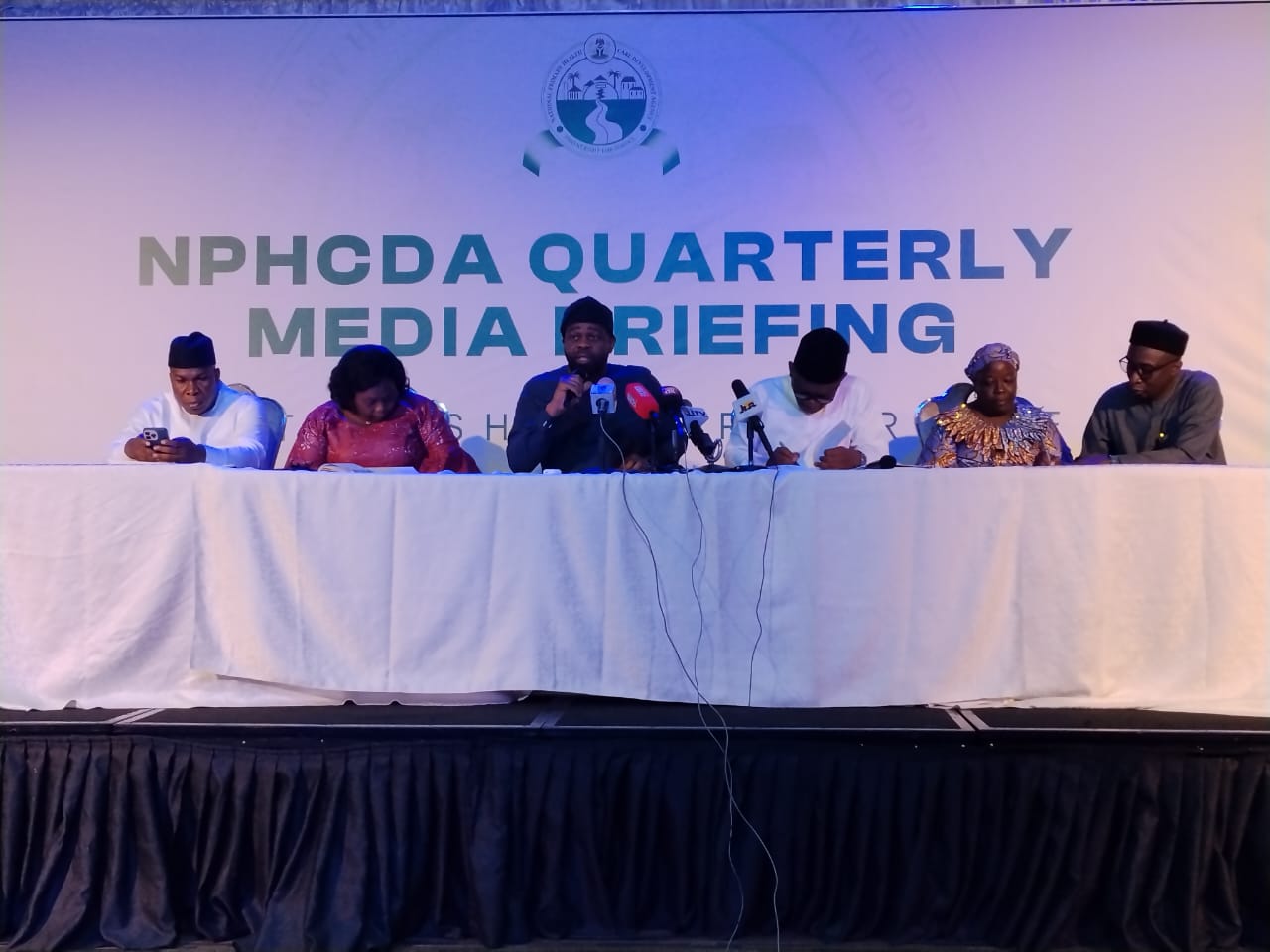
The Executive Director of the National Primary Health Care Development Agency (NPHCDA), Dr Muyi Aina, made the call in Abuja during the agency’s quarterly media briefing, saying 3,526 of the facilities had been renovated, commissioned and handed over to state and local governments, while work continued on 91 others.
Aina said the Federal Government’s intervention was designed to strengthen primary healthcare delivery, adding that the responsibility for ensuring the facilities remained functional rested largely with state and local governments.
He said, “The responsibility for delivering healthcare services rests largely with state and local governments. They are expected to ensure that these facilities are properly maintained, adequately staffed and provided with the operational funding required to deliver services to residents.”
The NPHCDA chief warned that investments in renovating and equipping the centres could be undermined if the benefiting governments failed to provide permanent health workers and sustain their operations.
He explained that the revitalisation programme included the installation of solar power systems, provision of water and sanitation facilities, and supply of medical equipment to improve service delivery.
Aina disclosed that the Federal Government had directly equipped more than 500 centres, while state governments and development partners had supported additional facilities.
He added that the agency was working towards ensuring that every ward had at least one Level Two primary healthcare facility, supported by an adequate number of Level One centres.
According to him, the number of Level Two facilities had increased by more than 59 per cent since March 2024, when the agency began tracking progress, while 53 per cent of approximately 27,000 primary healthcare centres were operating at Level One or Level Two.
Aina said the interventions had increased demand for primary healthcare services, with quarterly patient contacts rising from about 33 million to between 43 million and 45 million.
He added that quarterly first antenatal care visits had increased from 1.6 million to 1.8 million, while deliveries attended by skilled birth attendants rose from 483,000 in 2023 to approximately 700,000 in 2025.
The NPHCDA executive director also disclosed that the Federal Government had approved an additional N40bn through the Basic Health Care Provision Fund to support healthcare delivery, essential supplies, health security and emergency medical transportation.
He said facilities benefiting from the funding scheme served at least four times as many patients per facility as those not receiving the funds.
Aina added that the agency was working to increase the number of participating facilities from 8,300 to 13,512 to expand access to essential healthcare services nationwide.
Meanwhile, the Director-General of the National Health Insurance Authority (NHIA), Dr Kelechi Ohiri, said the number of Nigerians covered by health insurance had increased by 42 per cent, from about 16 million in January 2024 to 23.02 million.
Ohiri said the authority was working with relevant ministries and agencies to develop insurance packages for informal sector workers who lacked employers to pay their premiums.
He said, “We are working with relevant ministries and agencies to develop insurance packages that will enable informal sector workers to access health insurance coverage.”
The NHIA chief added that plans to enrol inmates in correctional facilities had received approval from the Ministerial Oversight Committee, with implementation expected to begin with the assessment and accreditation of healthcare facilities serving them.
According to him, eligible inmates would be verified through their National Identification Numbers and assigned to appropriate primary healthcare and referral facilities.
Ohiri disclosed that 3.18 million of the 23.02 million Nigerians covered by health insurance were poor and vulnerable persons whose premiums were paid by the government through the Basic Health Care Provision Fund.
He, however, identified high out-of-pocket healthcare expenditure as a major challenge, noting that it continued to expose many households to financial hardship.
The NHIA director-general said the National Health Insurance Authority Act, 2022, made health insurance mandatory for Nigerian residents, but called for stronger enforcement and increased public awareness to expand coverage.
He added that the authority was strengthening oversight of healthcare providers and health maintenance organisations to ensure that enrollees received services covered by their insurance plans.
Ohiri further disclosed that the NHIA had secured refunds for patients who were improperly charged, issued warnings and delisted facilities where necessary following investigations into complaints.
He said the authority was also introducing QR codes to enable enrollees to check the services covered by their insurance plans, while its 24-hour call centre would provide assistance and receive complaints.
Matthew Abi